Symptoms:
Stomach cramps, sweating, hot flushes, vomiting, and diarrhoea. High fever, high pulse, irregular heartbeat,
lowering of blood pressure, headache, weakness, dizziness, faintness, blurred vision, constriction of the pupils,
breathing and chest problems, lassitude, excessive thirst. Loss of coordination, hallucinations, vertigo,
confusion, delirium, convulsions, coma.
Some of the worst mushroom poisons cause liver or kidney damage, which can be identified by the onset of jaundice.
This, however, may take some time to be apparent but it is among the most serious of symptoms and must be treated
with extreme urgency as the liver and/or kidneys may cease to function altogether, which may result in death.
Take immediate action if any poisoning symptoms are observed.
Remission and secondary symptoms:
After the first onset of symptoms there may be a period of remission (one or two days) and thus expectation of full
recovery but this must be ignored. Treatment must still be sought, as symptoms may return and after this period
liver and/or kidney failure may occur.
This remission period may occur in poisoning by some of the most deadly mushrooms: Amanita phalloides,
Amanita virosa and other Amanitas. This delayed secondary onset of severe symptoms may also occur in Cortinarius
and Galerina poisoning.
Action (do not delay)
Immediate action must be taken. Telephone or visit your doctor and/or the local hospital. They may pass you on to a
poison centre or another hospital that specialises in mushroom poisoning.
If you can, get in touch with a mycologist to aid in identification of the species ingested. Although the hospital
will start to treat the symptoms straight away, even before they know what toxins are involved, knowing which
species of mushroom and thus what toxins are involved will make treatment far more effective.
Actions to assist treatment
Firstly, make sure that you record the time from ingestion and the first evidence of symptoms. This is vital
because symptoms of the most poisonous and deadly mushrooms may take a long time to develop. The time interval
from eating the mushroom to noticing the symptoms may be as long as one to two days or even longer.
Secondly, keep a fresh specimen of any wild mushroom you collect and eat. Often more than one species of mushroom
may be used in dish, in which case keep a specimen of each of the different species ingested. Make sure that the
specimens are seen by the hospital or poison centre and mycologist.
Alternatively, if you have failed to keep specimens, make detailed notes about the specimens that have been eaten:
habitat, size, colour, type of stem and stem base, gilled or other forms of mushroom, morels, brackets, truffles.
The more detailed the notes the better chance a mycologist will have of identifying the species that have caused
the problems.
Finally, around the time of eating the mushrooms had you drunk any alcohol? That day? The day before? Or the day
after? Alcohol in conjunction with Coprinus atramentarius may cause a severe allergic reaction.
Remember
Do not believe old wives’ tales about how to distinguish between edible and poisonous mushrooms. They are all
rubbish. Taste is no help either. Some of the most deadly poisonous mushrooms can be quite tasty. Claudius, the
Roman emperor, was thought to have been murdered by including the poisonous Amanita phalloides in a dish of his
favourite mushrooms, the rather similar, but delectable, Amanita caesarea.
Occasionally people can have an allergic reaction to some edible mushrooms or even in extreme cases to all species
of mushroom. Also some edible mushrooms can be poisonous if they are old and deteriorating or if they have been
contaminated by some other fungal bodies.
|
 |
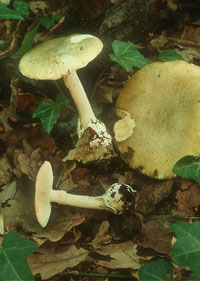
The most dangerous species are members of the genus Amanita, the most common of which are Amanita virosa
and its twin Amanita bisporigera, along with the European Death Cap Amanita phalloides
(illustrated above) Amanita virosa is the main cause of fatalities, but many other members of the genus are
poisonous to some degree. The two main toxins involved are amanitin and phalloidin. Therefore I believe no species
of the genus Amanita should be eaten.
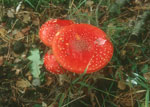
Amanita muscaria Fly Agaric
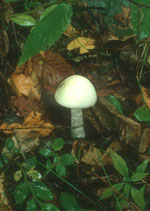
Amanita virosa Destroying Angel
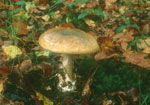
Hebeloma sinapizans
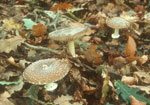
Amanita pantharina Panther Cap
|