|
|
Bryce Meyer (United States) - 29 October 2013
Found in Bremerton, Washington. Late October.
|
|
|
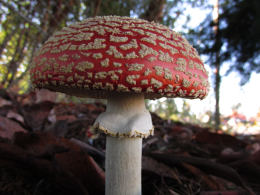
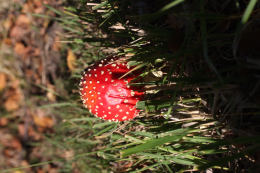
Ben Adams (United Kingdom) - 06 October 2013
Lovely specimin soht while out searching for Ceps in Crowthorne..
|
|
|
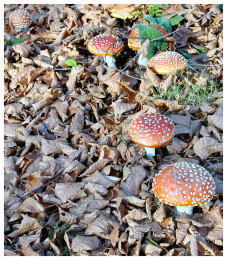
David Newton (United Kingdom) - 16 September 2013
Photographed in the cemetary of Hedley Village in Northumberland.
|
|
|
debbie viess (United States) - 13 September 2013
The muscaria from OZ may not be growing right up against a tree, but the thick layer of pine duff from which they are growing surely indicates a pine tree presence.
Muscaria were introduced to the southern hemisphere on the roots of plantation pines. This is a typical habitat for them. They also are MR with eucalyptus in some areas.
But somewhere, there's a tree and its roots, from which these mushrooms grow.
|
|
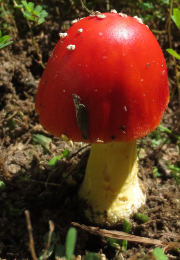
keith newell (United States) - 28 August 2013
25 August, 2013 -- Hillsborough, NC, USA -- full sun
|
|
|
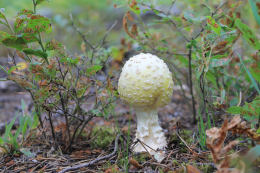
emily mertz (United States) - 17 August 2013
Found this in early August in the Upper Peninsula of Michigan.
|
|
|
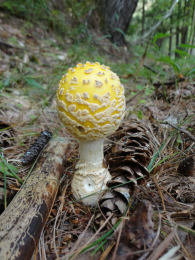
Libby Young (United States) - 31 July 2013
Found in the woods in the Adirondacks of NY, early fall of 2011
|
|
|
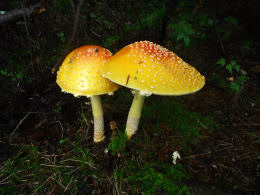
Ryan Handeland (United States) - 29 July 2013
|
|
|
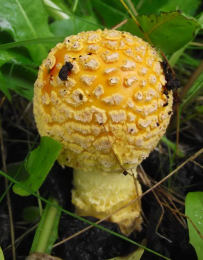
Ryan Handeland (United States) - 29 July 2013
|
|
|
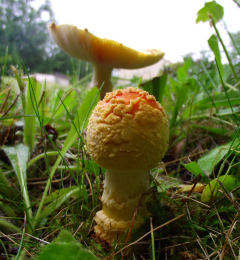
Ryan Handeland (United States) - 29 July 2013
Grand Marais MN
|
|
|
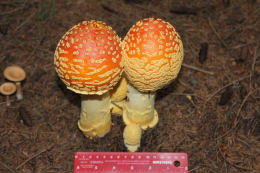
Zoran Tasovac (Canada) - 01 July 2013
Found near Ancaster, Ontario on 1st of July, 2013.
It is usually big mushroom and apparently the Great Lakes region mainly has orange-yellow specimens.
|
|
|
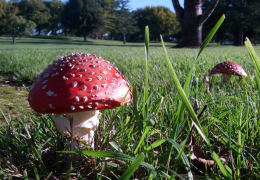
John MacGibbon (New Zealand) - 13 May 2013
Fly Agaric mushrooms at the golf course in Martinborough, New Zealand. From my blog: http://jmacg.com/2013/05/13/off-course-photography-substitute/
|
|
|
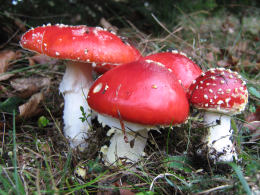
Marjan Kustera (Yugoslavia) - 07 March 2013
Beautiful group find 11th November 2012.
in Vranje district,Serbia.
Mycological Society of Niš,Serbia
|
|
|
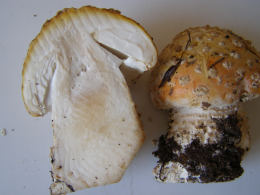
Tudor Ioana (Romania) - 12 December 2012
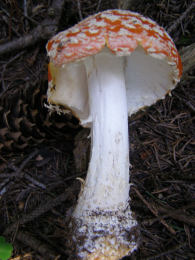
Paul Covic si Ioana Tudor, Romania, 2012, Amanita muscaria
|
|
|
Tudor Ioana (Romania) - 12 December 2012
Paul Covic si Ioana Tudor, Romania, Amanita muscaria, 2012
|
|
|
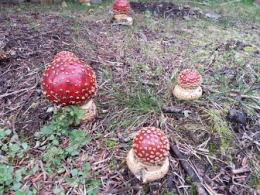
Janis Hagel (United States) - 23 November 2012
Waldport, OR 11/22/12
|
|
|
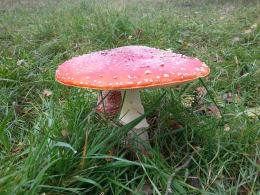
Steve Sheldon (United Kingdom) - 22 October 2012
Thought this was a good specimen!
|
|
|
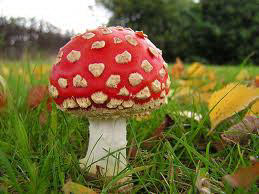
xavier oliver (United States) - 04 July 2012
the fly agric mushroom is my favorite.
|
|
|
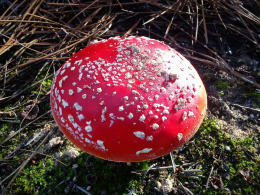
Sérgio Borralho (Portugal) - 30 November 2011
Azoia, Cabo Espichel, Portugal 27/11/2011
|
|
|
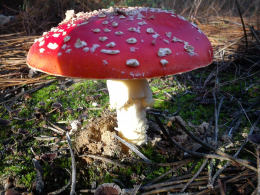
Sérgio Borralho (Portugal) - 30 November 2011
Azoia, Cabo Espichel, Portugal 27/11/2011
|
|
|
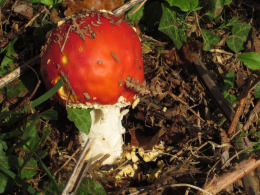
Jane Brown (United Kingdom) - 15 November 2011
Found in a sunny field boundary at the edge of mainly broadleaved woods with some scots pines. On the Quantock hills in Somerset.
|
|
|
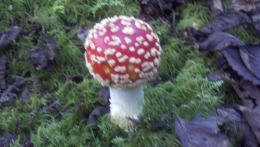
brian Hobbs (United States) - 12 November 2011
I saw this fun guy right off the path as i was walking through a small cluster of pine trees towards the beach. Ocean Park, WA
|
|
|
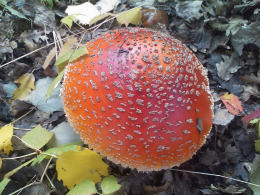
Rahim Yalcintas (Turkey) - 01 November 2011
We found that in Yenice Village / Pýnarhisar / Kirklareli
(Thrace region of Turkey)
About 20 cm. of stem.
Was very pretty and well seen.
|
|
|
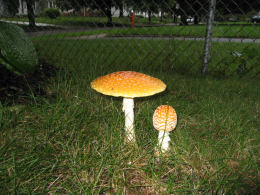
Mike Pintz (United States) - 30 September 2011
Growing under pine tree, Cleveland , Ohio 28Sept11
|
|
|
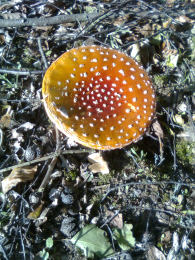
Emily Sneddon (United Kingdom) - 14 September 2011
Spetember 2011 Petersfield, UK.
Amazing colours.
|
|
|
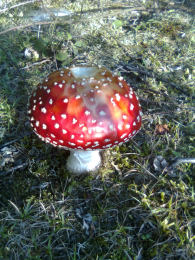
Emily Sneddon (United Kingdom) - 14 September 2011
Taken in woodland in Petersfield, UK. Stunning shape.
|
|
|
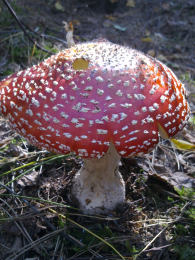
Rachel Dyson (United Kingdom) - 14 September 2011
Found in Thetford forest 13 September 2011
|
|
|
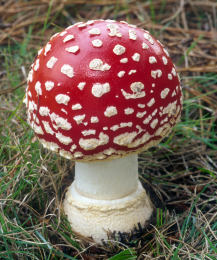
Dejan Stojanovic (Yugoslavia) - 25 July 2011
Mushroom vegetate in the wider Zaplanje, municipalities Gadžin Han city of Nis, Southern Serbia, SERBIA.
|
|
|
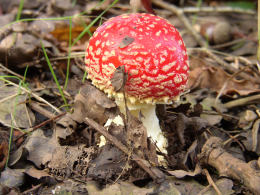
Jo Priestnall (United Kingdom) - 27 June 2011
Oct 2007 New Forest
|
|
|
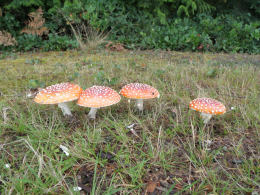
Cory Pahl (Canada) - 07 November 2010
Growing on the roadside on Vancouver Island. I've read that the deadly dose is 20+ fresh caps taken at once and that they're edible if boiled properly. Dear Cory Do Not eat it it contains loads of toxins. Roger Phillips
|
|
|
Darryl Christensen (United States) - 28 October 2010
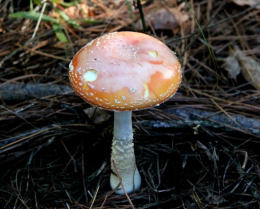
This specimen and others were widely scattered under pines in Richmond County, VA in mid October. The formosa and alba varieties also occurred in the same pine woods at the same time.
|
|
|
Ian Burnie (United Kingdom) - 25 October 2010
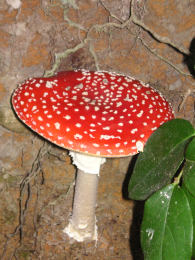
Found on a bankside by a stream on the Cragside Estate, Rothbury, UK October 2010. Very striking Mushroom.
|
|
|
david milnes (United Kingdom) - 13 October 2010
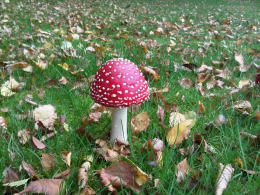
Was taken back when I saw this earlier in parents garden - perfect shape!
|
|
|
Kris Ann Lewis (United States) - 13 October 2010
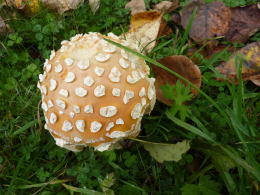
This is a close up picture of the same mushroom. The next day it had opened up more and was about 5 inches in diameter. Bellingham, Washington
|
|
|
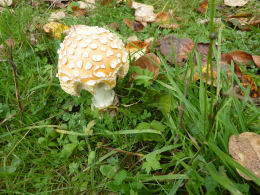
Kris Ann Lewis (United States) - 13 October 2010
Thanks to a friend that found your website, I now know more about this mushroom that grew in a grassy area between my driveway and a naturally occuring pond. Bellingham, Washington
|
|
|
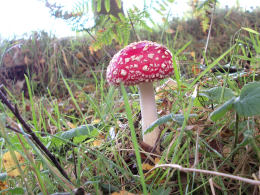
Jane Gardner (United Kingdom) - 12 October 2010
I saw this mushroom at Bolam Lake, nr Belsay in Northumberland, UK.
|
|
|
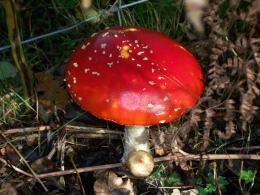
Mark Plevin (United Kingdom) - 06 October 2010
Seen at the edge of (primarily) pine forest, near Churchill. Somerset 06/10/10.
|
|
|
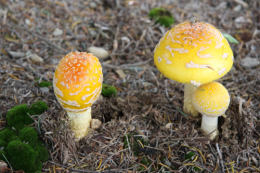
Abby Bell (Canada) - 03 October 2010
These are growing under a Fir tree in our yard. Would they be Amanita Muscaria
|
|
|
Richard Oakley (United Kingdom) - 25 September 2010
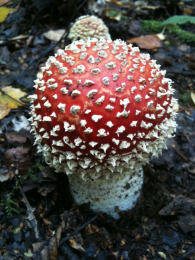
Richard Oakley (UK) - Epping Forest 24 September 2010
|
|
|
andrew c (United Kingdom) - 20 September 2010
|
|
|
Ashley Watson (United Kingdom) - 05 September 2010
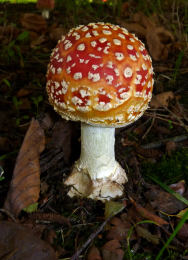
September 4th 2010; Leicestershire, England
|
|
|
francine conway (United Kingdom) - 01 September 2010
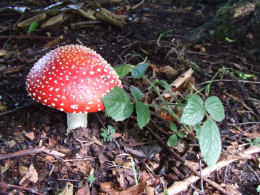
Newcastle, UK, August 2010
|
|
|
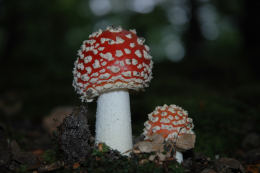
Mirosław Wantoch-Rekowski (Poland) - 21 June 2010
11/09/2008 Lasy sosnowe.Kaszuby Poland
|
|
|
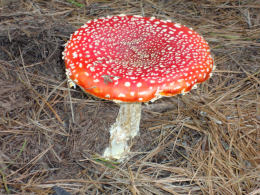
Suzette Cavanaugh (United States) - 28 January 2010
Photo taken 1/15/10 at McNee Ranch State Park, Montara, California.
|
|
|
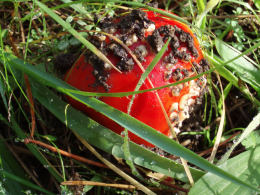
gary king (United States) - 23 January 2010
I found these in Point Reyes CA
|
|
|
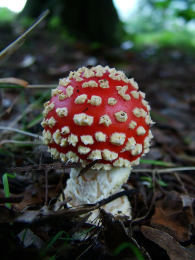
John Lloyd (United Kingdom) - 18 January 2010
Photo taken 15/10/2006 Forest of Bowland - Lancashire - UK
|
|
|
Adam Green (United Kingdom) - 16 November 2009
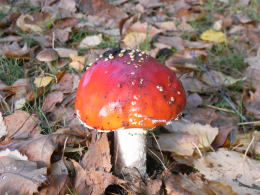
Sandringham uk - Nov 09
|
|
|
Jon Bemrose (United Kingdom) - 30 September 2009
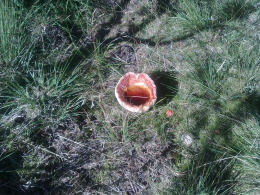
Fully Mature specimen, approx 200mm across, fully cupped and holding water, with minimal damage. North Yorkshire Richmond area UK. 26 September 2009.
|
|
|
Mr Jackson (United States) - 22 September 2009
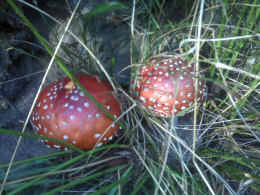
Fly Agaric in West Yorkshire.
By David J Jackson
|
|
|
david hamilton (United Kingdom) - 26 August 2009
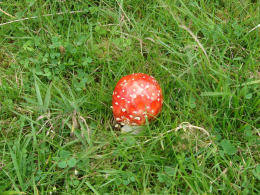
a Fly Agaric button growing in a field in Peeblesshire within the Borders region of Scotland.
|
|
|
Ben De'Giovanni (Finland) - 24 August 2009
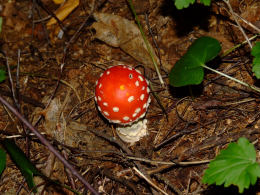
Found 24.10 in the woods of Vanhakaupungilahti nature reserve, Helsinki, Finland. Also in vicinity cep and chanterelle.
|
|
|
lee collins (United Kingdom) - 27 April 2009
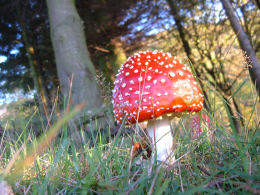
Amanita muscaria
|
|
|
Branislav Uzelac (Yugoslavia) - 17 March 2009
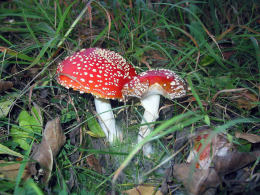
photo by Rastko Kolachek from Serbia
|
|
|
nesko simic (United Kingdom) - 05 February 2009
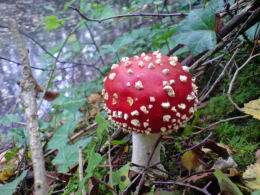
berks
|
|
|
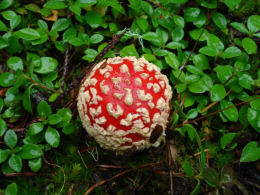
Trevor Clayton (United States) - 22 December 2008
Olympic Peninsula, Washington
|
|
|
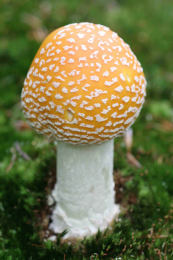
Lorand Bartho (Hungary) - 01 November 2008
Similar in colour to the American variety var. formosa, but found in Hungary (amongst moss, under beech)
|
|
|
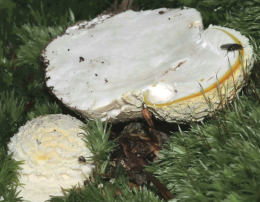
Lorand Bartho (Hungary) - 31 October 2008
Flies seem to really like it. This one chose the cap cuticle to feeed on.
|
|
|
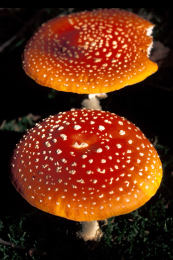
Lorand Bartho (Hungary) - 31 October 2008
|
|
|
Lorand Bartho (Hungary) - 31 October 2008
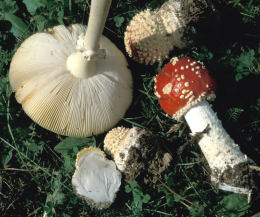
Although the substance muscarine has been isolated from A. muscaria, this mushroom usually contains only minute amounts of muscarine. However unusual, it may happen that symptoms of muscarine poisoning (running of saliva, abdominal cramps, etc.) also appear after the ingestion of A. muscaria.
|
|
|
Lorand Bartho (Hungary) - 24 October 2008
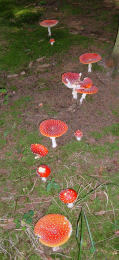
"Stream"
|
|
|
Lorand Bartho (Hungary) - 24 October 2008
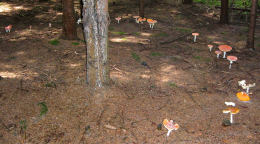
Fairy ring
|
|
|